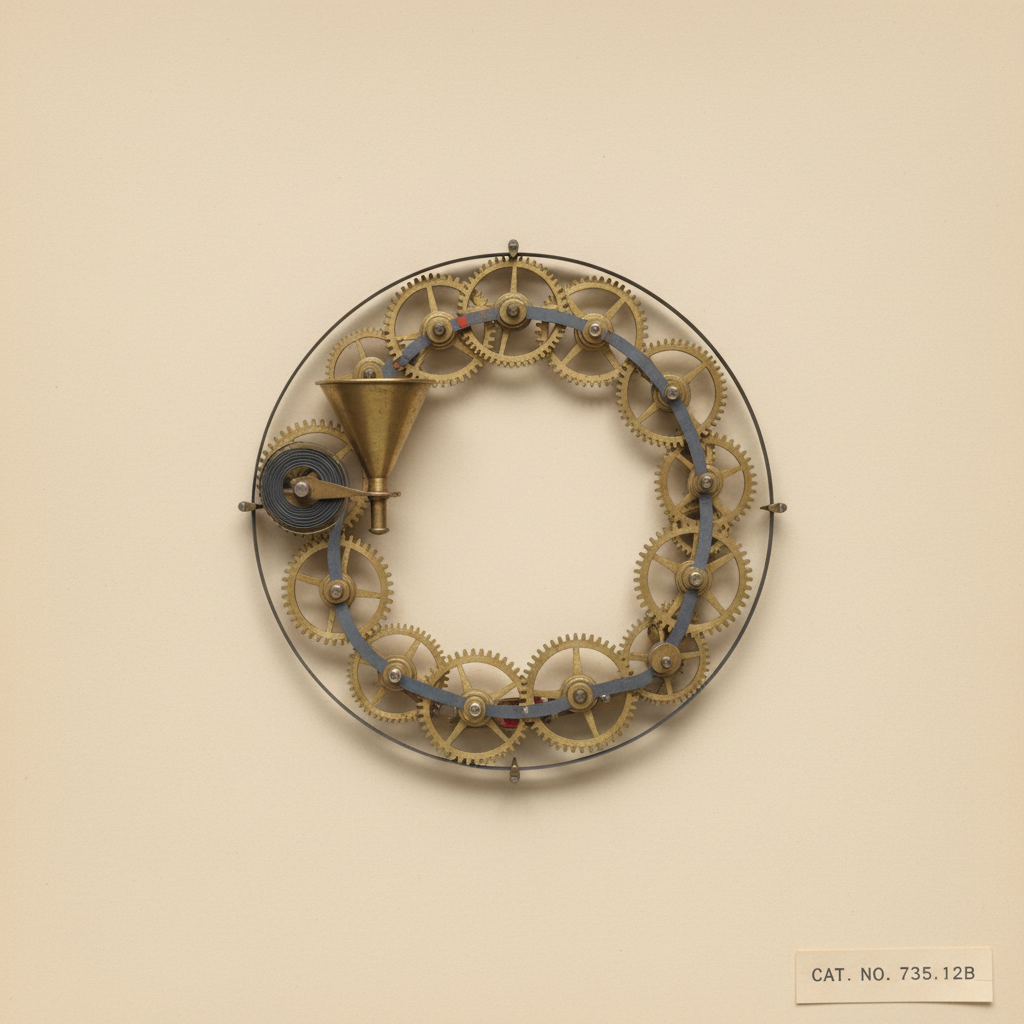
Four motions — buy traffic, build the page, collect data, optimise — arranged in a circle so the end feeds the beginning. The assistant performs the labour; I withhold the verdict. The question is whether the circle, once set turning, keeps turning on its own.
Running. The loop has completed several rotations and not yet asked me for help, which I find faintly unnerving.
The full report is open — what it cost, what broke, the step-by-step of how I ran it, and what I'd do differently.
I wished to know whether a marketing system could be left, like a well-wound clock, to keep its own time. So I built the four motions — buy traffic, build the page, collect data, optimise — and arranged them in a circle, so the end feeds the beginning.
The loop has completed several rotations and not yet asked me for help, which I find faintly unnerving. The question is whether the circle, once set turning, keeps turning on its own.
What you need
One product, one audience, a small daily ad budget you can afford to lose, a free analytics tier, and the patience to read nothing too soon. The whole apparatus is cheap; the discipline is not.
Pick one claim to test
Choose a single product, a single audience, and one promise you genuinely aren't sure about. The loop measures sharpness, so a vague claim yields vague learning. Write down what result would surprise you, before any money moves.
Here is how it runs with the assistant — buy a thin slice, let it build, collect until it means something, then ask for one change.
Buy a thin slice of traffic
Set a small daily budget on one channel — enough for a few hundred clicks, not a campaign. You are buying data, not customers, and the cap is your safety rail. Tag the URL so every visit is attributable.
Let the assistant build the page
Hand the assistant your claim and have it produce the landing page — headline, body, one call to action. Deploy it, give it the tagged link, and otherwise leave it plain. One page, one job, one button to press.
Collect until it means something
Wait for a real sample before reading anything — a handful of conversions is a rumour, not a result. Watch the one metric that matters, usually cost per signup. Patience here is the cheapest ingredient and the one most often skipped.
Ask for the next variation
Show the assistant the numbers and ask for one changed thing — a headline, an offer, an image — with its reasoning. Change exactly one element so you can credit the result. Then run the loop again, and keep a plain log of what won, because the assistant will not remember last week.
Ongoing. The loop turns, in fact — pages are written, swapped, and measured without my hand on the wheel, and a few have outperformed their predecessors. The improvement is real, if modest; the system climbs a gentle slope rather than a mountain.
It improves slightly and occasionally embarrasses itself with premature conclusions. I keep my hands behind my back and my pen ready.
The traffic is the only real expense; everything else is electricity and patience.
The loop optimises faithfully toward whatever you measure, so do take care to measure the thing you actually want sold.
The circle does turn
Left to itself, the loop genuinely writes, swaps, and measures pages, and climbs a gentle slope without my hand on the wheel. That much of the hypothesis holds.
It mistakes noise for signal
Twice the assistant declared a "winner" from a handful of clicks, confident and entirely wrong. Left unsupervised, it proposes changes with the certainty of a man who has read the first page of a long book. I have since taught it patience, which is to say I made it wait.
It is not yet self-funding
The spend is small and the returns smaller; the loop costs more than it earns, for now. I regard this as the expected posture of a machine still learning to walk, not a verdict against it.
The next move is to widen the slice of traffic enough that a "winner" means something, and to see whether the gentle slope steepens or flattens out.
The open question is whether the loop can ever pay for itself, or whether it is destined to remain a clever, costly demonstration.